
Homeowner Education Hub
Know your chimney before anyone climbs on the roof. Plain-English guides to how your chimney works, what can go wrong, and what an inspection should actually show you.
The Anatomy of a Chimney
Tap a number on the diagram or a part in the list to see what it does and how it usually fails.
Chimney Cap & Spark Arrestor
What it does
Common failures
Have a factory-built (prefabricated) fireplace? It uses a metal chimney pipe inside a framed chase, refractory panels instead of firebrick, and a metal chase cover instead of a masonry crown. The same jobs still apply, and the manufacturer’s instructions set the requirements.
Chimney Talk, Translated
The words you will see in an inspection report, in plain English, so you can ask the right questions.
- Creosote
- A tar-like residue that forms when wood smoke cools inside the flue. It builds in three stages, from flaky soot to a hard, shiny glaze. All three burn, and creosote is the fuel in most chimney fires. Regular sweeping removes it before it builds up.
- Glazed creosote
- The third and most dangerous stage of creosote: a hard, shiny coating that brushes cannot remove. It usually comes from smoldering fires or a flue that is too cool. It takes chemical treatment or special tools to remove.
- Draft / drafting
- The natural pull that carries smoke up and out of the chimney. Warm flue gases rise and draw fresh air into the fire behind them. Weak or reversed draft is the most common reason a fireplace smokes into the room.
- House pressure
- Exhaust fans, dryers and tight construction can pull air out of a home faster than it comes in. That negative pressure can fight the chimney’s draft and pull smoke or exhaust back inside. We can measure it with a digital manometer.
- Flue
- The open passage inside the chimney that carries smoke and gases outside. Each fireplace, stove or furnace needs its own properly sized flue.
- Flue liner
- The material that lines the flue: clay tile, stainless steel or a cast-in-place mix. It protects the brick and the house framing from heat and corrosive byproducts.
- Firebrick
- Dense, heat-resistant brick that lines a masonry firebox, set with special refractory mortar instead of regular mortar.
- Refractory panels
- The molded, heat-resistant panels that line the firebox of a factory-built (prefabricated) fireplace. Cracks and erosion are common with age. The manufacturer’s instructions for that model say when a panel must be replaced.
- Tuckpointing
- Repairing mortar joints by grinding out the worn mortar to a set depth and packing in fresh mortar. It restores the joints that hold the brick together and keeps water out.
- Spalling
- When the face of a brick flakes, pops or crumbles off. It is usually caused by water soaking into the brick and then freezing and expanding.
- Efflorescence
- A white, powdery stain on brick. It is salt left behind as water moves through the masonry, so it is a sign of moisture getting in.
- Crown
- The cement slab that caps the top of a masonry chimney around the flue. It is the chimney’s first line of defense against water.
- Chimney cap
- The metal cover over the top of the flue that keeps out rain, animals and debris, usually with a spark-arrestor screen.
- Chase & chase cover
- A chase is the framed, sided box that encloses a factory-built chimney pipe. The chase cover is the metal pan that seals its top. Rusted or sagging chase covers are a leading cause of leaks on newer homes.
- Flashing
- The metal that seals the joint where the chimney meets the roof.
- Cricket (saddle)
- A small peaked roof on the uphill side of a chimney that steers water around it instead of letting it pool.
- Clearance to combustibles
- The minimum air space required between a chimney, fireplace or vent and anything that can burn, such as framing, trim and insulation.
- Listed appliance
- A fireplace, stove, insert or vent that has been tested to a safety standard by a recognized lab. It must be installed and maintained exactly as its manufacturer’s instructions say.
- Levels of inspection
- NFPA 211 describes three levels. Level 1 covers the readily accessible parts of the chimney and is right for yearly service when nothing has changed. Level 2 adds the accessible attic, crawl space and roof areas plus a camera scan of the flue, and is called for when a home is sold, the system is changed, or after a chimney fire or storm. Level 3 involves removing parts of the building or chimney to reach concealed areas when a serious hidden problem is suspected.
- NFPA 211
- The Standard for Chimneys, Fireplaces, Vents, and Solid Fuel-Burning Appliances, published by the National Fire Protection Association. It defines the three levels of chimney inspection. Our reports reference the 2024 Edition.
- IRC
- The International Residential Code, a model building code from the International Code Council. Cities and counties adopt a specific edition, often with local changes, so the requirements for your home depend on where it is. It covers chimney and fireplace construction, clearances and hearth sizes.
- Manufacturer’s instructions
- The installation and operating manual for a listed fireplace, stove, insert or vent. For factory-built systems, these instructions set the requirements, and the code points back to them.
- Camera scan
- A video inspection of the inside of the flue using a camera lowered from the top or raised from the bottom. It shows cracks, gaps and blockages that cannot be seen from either end.
- Relining
- Installing a new liner, usually stainless steel, inside an existing chimney when the original liner is damaged or the wrong size for the appliance.
- Carbon monoxide (CO)
- A colorless, odorless gas produced by burning any fuel. A blocked or leaking flue can push it into the home, which is why working CO alarms matter.
No matching terms. Call us at 636-946-1622 and we will explain it.
The Danger of the Flashlight Sweep
A flashlight from the firebox shows the first couple of feet. Most of the flue, where liner damage hides, is out of sight.
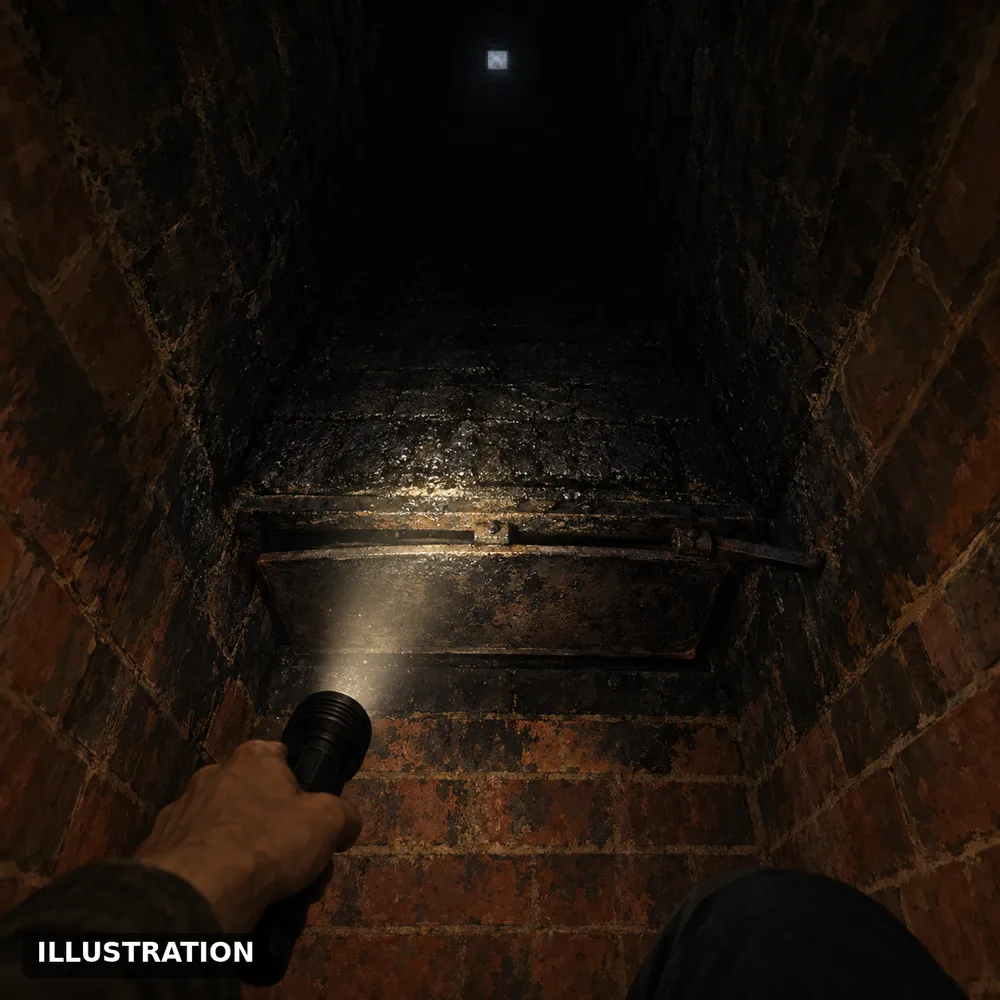
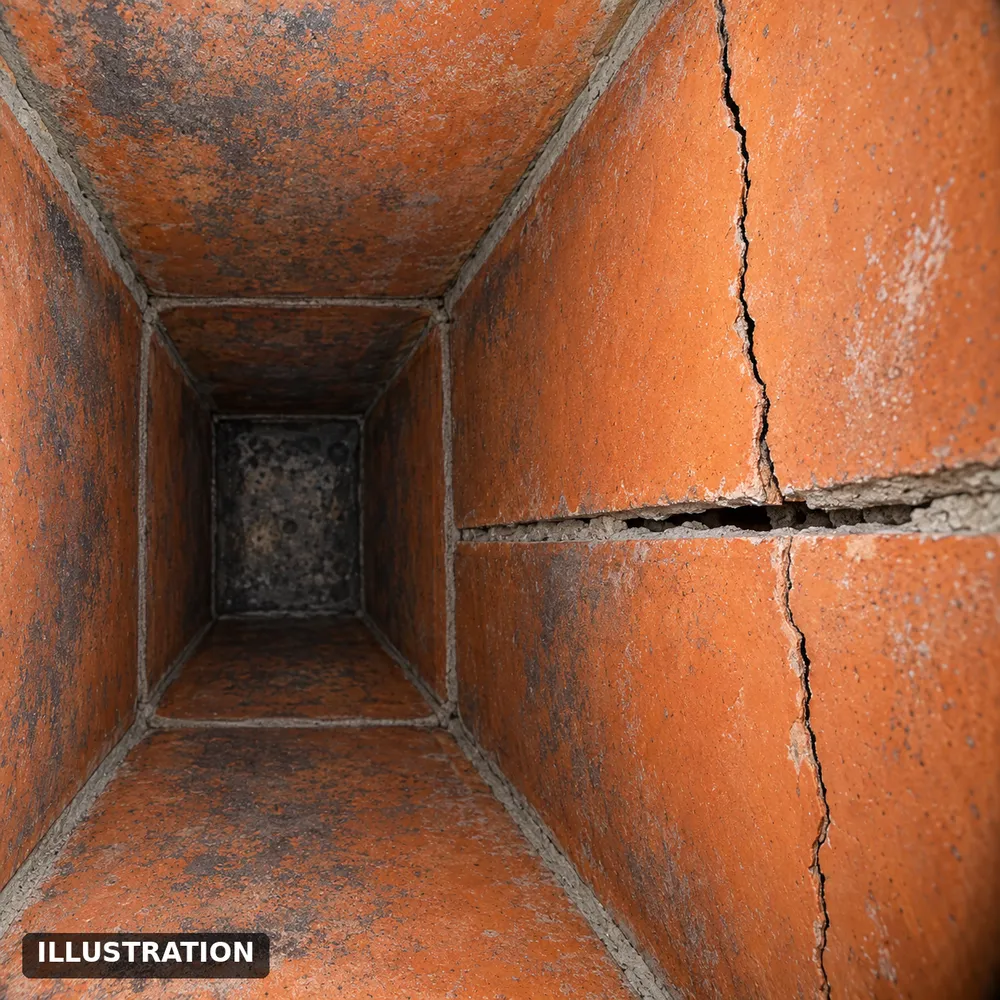
Images are illustrations for education. Your report includes the actual photos and video from your chimney.
What a visual-only inspection misses
- Cracked or shifted flue tiles that let heat reach the brick and nearby framing
- Missing or open mortar joints between liner sections
- Damage left by a past chimney fire, which homeowners often never notice
- Creosote buildup and glazing above the smoke chamber
- Blockages: nests, fallen debris and collapsed tile
- Offsets and liner gaps where the flue bends
That is why every chimney cleaning and inspection we offer includes an internal camera scan of the flue, and why the findings in your report come with images instead of guesses. Learn more about the tools we use.
Water Intrusion
Water does more damage to chimneys than fire. Here are the five places it gets in.
- 1Cracked crown
Freeze-thaw cycles open cracks in the crown. Water runs straight down into the masonry and around the flue liner.
- 2Deteriorated mortar joints
Worn, recessed joints soak up rain like a sponge. Water travels inside the brick, causing spalling, stains and damp attic framing.
- 3Rusted chase cover
On factory-built chimneys, a flat or rusted metal chase cover holds water, rusts through, and drips inside the chase and onto the fireplace.
- 4Failed roof flashing
When counter-flashing pulls loose or was only caulked, water slips behind the flashing and down the inside of the roof deck.
- 5No cricket
On wider chimneys, water and snow pile up against the uphill side. Without a cricket to split the flow, it works into every gap.
Signs water is already getting in: stains on the ceiling or wall beside the fireplace, a musty smell, rust on the damper or firebox, white staining on the brick, or flaking brick faces. Our Hearth Diagnostic Plus uses moisture mapping and thermal imaging to document where water is traveling behind finished surfaces.
Frequently Asked Questions
NFPA 211 calls for chimneys, fireplaces and vents to be inspected every year and cleaned when needed. Most wood-burning fireplaces in regular use need a sweep yearly. Gas fireplaces still need a yearly check of the burner, pilot and venting.
A thin layer of soot is normal. Creosote thicker than about an eighth of an inch, or any shiny glazed creosote, is enough fuel for a chimney fire. Your report notes what we found and how much.
A loud roaring or popping sound, dense smoke, a strong hot smell, or flames or sparks coming out of the top of the chimney. Get everyone out, call 911, and do not use the fireplace again until it has been inspected. Many chimney fires go unnoticed and are found later on a camera scan.
Dry, seasoned hardwood that has been split and stored for at least six months to a year. Wet or green wood smolders, makes more creosote and drafts poorly. Never burn trash, cardboard, painted or treated wood, or Christmas trees.
Yes. Any fuel-burning appliance can produce carbon monoxide. Install CO alarms following the manufacturer’s instructions and your local code, typically on every level and outside sleeping areas, and test them monthly.
Yes, once the fire and embers are completely out and cool. An open damper lets heated and cooled air escape. Never close it while embers are still smoldering, because that can push smoke and carbon monoxide into the room.
Usually it is creosote odor pulled into the house by negative air pressure, often worse in humid weather. A sweep, a properly working damper and a top-sealing damper or cap can help. If the smell is strong or comes with smoke, have it checked.
It depends on the crack. In masonry fireboxes, cracked or loose firebrick should be repaired so heat cannot reach the structure behind it. In factory-built fireplaces, the manufacturer’s instructions for that model say when a refractory panel must be replaced. We document what we find so you know which applies.
We are always happy to talk through what you are seeing by phone, free. To recommend and price a chimney repair, we first complete an inspection and report, so the estimate is based on documented conditions instead of a guess.
Code-Compliant Inspections
Every finding in our report is tied to a written reference, so you know why it matters and what it is compared against.
NFPA 211, 2024 Edition
The national standard for chimneys, fireplaces and vents. It defines the Level 1, 2 and 3 inspections and is the basis of how we inspect.
Manufacturer’s instructions
For listed fireplaces, stoves, inserts and vents, the installation manual sets the clearances, parts and limits. We look up the model and compare against it.
The code adopted at your address
St. Louis City, St. Louis County, St. Charles County and each city adopt their own residential, mechanical and fuel-gas code editions. We reference the one that applies where your home is.
What you get in the report
Each finding includes a photo, its location, a measurement where it applies, and the reference it is compared against. Findings are sorted into five clear categories:
- Hazard - Do Not UseA condition that makes it unsafe to use until it is corrected.
- Repair RecommendedSomething that should be corrected, with the reference it is based on.
- Maintenance RecommendedRoutine upkeep, like sweeping or a cap replacement.
- ObservationSomething worth knowing about that needs no action now.
- Not Inspected / LimitationAn area we could not reach or see, and the reason why.
There is no pass or fail. We see it, measure it and document it, so you, your agent, your insurer or your contractor can make decisions from the same facts. Our inspections are independent reviews for you; they do not replace permit inspections done by your local building department.
Not sure which inspection you need? Use the Service Finder or see our four simple service choices.
Questions About Your Chimney?
Phone guidance is always free. Call 636-946-1622 Monday through Friday 8 AM to 4 PM and Saturday 9 AM to 1 PM, or book your service online.