
Chimney Relining St. Louis
UL-Listed chimney liner systems for cracked, unlined, or undersized flues. Safer venting for fireplaces, inserts, stoves, furnaces, and water heaters.
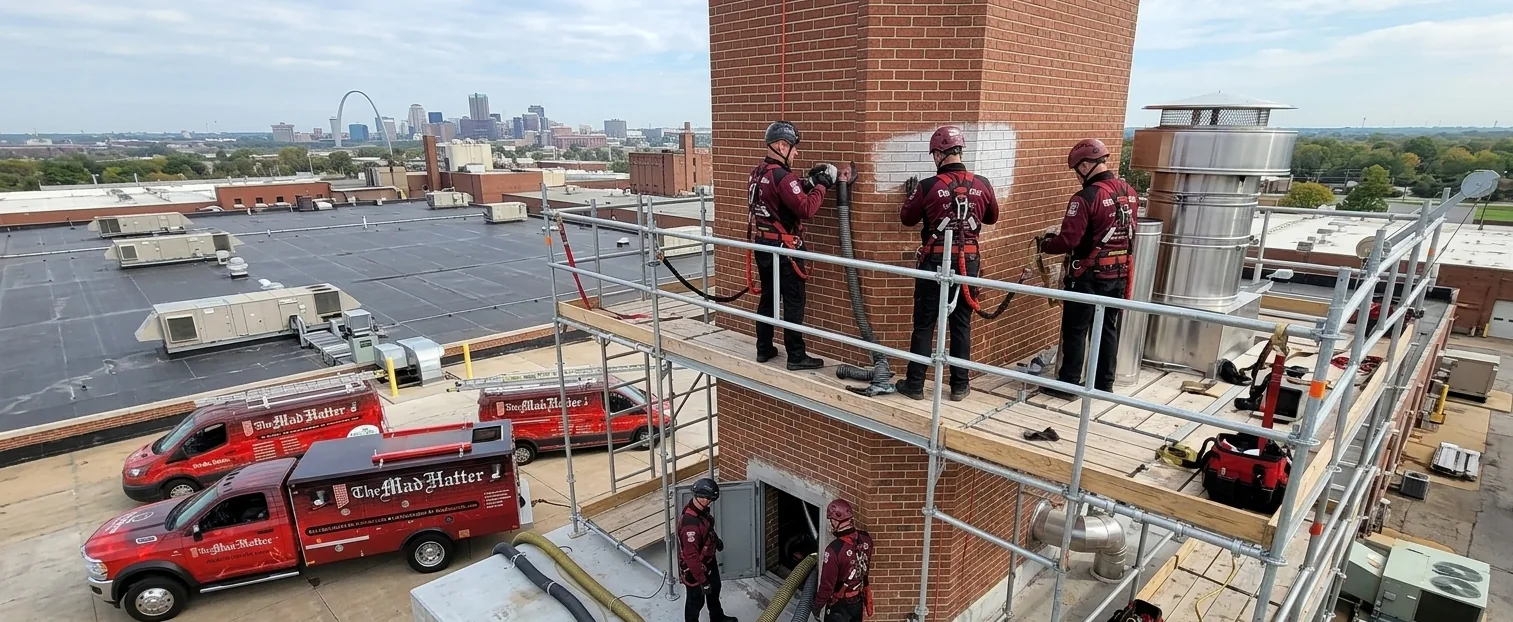
Why Chimney Liners Matter
The flue liner is the protective inner wall of your chimney. It contains heat and combustion gases and carries them safely outside. When a liner is cracked, missing, or the wrong size, heat can reach nearby wood framing, and carbon monoxide and other gases can leak into the home. Many St. Louis area homes built before the 1950s were constructed with no liner at all, and many clay tile liners have cracked after decades of use.
The Mad Hatter Service Company installs UL-Listed chimney liner systems, tested and listed to the UL 1777 standard for chimney liners, and sized for the appliance they serve. Every installation is completed to the manufacturer's listing and the St. Louis City & County and St. Charles City & County currently adopted municipal code.
Signs You May Need a Chimney Liner
- Cracked, offset, or missing clay flue tiles found during an inspection
- An older chimney that was built without a liner
- A new furnace, water heater, insert, or stove that needs a properly sized flue
- Damage after a chimney fire
- White staining, crumbling mortar, or tile pieces in the firebox or cleanout
- Condensation or drafting problems with gas appliances
Our Relining Services
- Stainless steel liners for wood-burning fireplaces, inserts, and stoves, sized to the appliance and connected to code
- Liners for gas furnaces, boilers, and water heaters, including relining after an appliance replacement
- Gas insert and gas log venting with listed components
- Chimney caps and top plates to finish and protect the new liner
- Insulation where required by the liner listing or for better draft performance
How the Relining Process Works
- Inspect. We scan the flue with a camera and measure it so the liner is sized and listed for your appliance.
- Quote. You get a clear written estimate before any work begins.
- Prepare. We sweep the flue and remove obstructions or damaged tile where needed.
- Install. The liner is installed from the top down and connected to the appliance or smoke chamber.
- Finish and verify. We install the top plate and cap, check draft and operation, and document the work.
Relining is often paired with masonry work such as crown replacement or tuckpointing. See our chimney repair page for IRC-compliant masonry repairs, or start with a chimney inspection if you are not sure what your chimney needs.
Frequently Asked Questions
Relining is quoted after an inspection because the price depends on the chimney height, flue size, appliance type, and any repairs needed. Call today for your free estimate.
Often, yes. A new high-efficiency appliance may need a smaller or different flue than the old one. An oversized or deteriorated flue can cause condensation and drafting problems.
A UL-Listed liner has been tested to the UL 1777 standard for chimney liners and must be installed according to its listing. That is why we size and install every liner for the specific appliance it serves.
Sometimes, if the damage is minor. When tiles are cracked, offset, or missing in several places, a UL-Listed stainless steel liner is usually the safest and most reliable fix.
Get a Free Relining Estimate
Call today for your free estimate. Book online or call 636-946-1622 Monday through Friday 8 AM to 4 PM and Saturday 9 AM to 1 PM.